In the high-stakes world of insurance, especially when dealing with high-value clients, efficiency, personalization, and robust data management are not just desirable, they’re essential. Imagine trying to manage complex policy details, claims processing, and client interactions for hundreds of VIP clients using spreadsheets and disparate systems. The potential for errors, missed opportunities, and ultimately, client dissatisfaction, is enormous. This is where the strategic integration of Customer Relationship Management (CRM) and Enterprise Resource Planning (ERP) systems becomes a game-changer.
Building an effective CRM–ERP strategy for high-value insurance clients isn’t simply about implementing software; it’s about creating a seamless, data-driven ecosystem that empowers your team to deliver exceptional service. It’s about understanding the unique needs of these clients, anticipating their future requirements, and providing tailored solutions that build loyalty and drive long-term profitability. It’s about moving from reactive service to proactive relationship management.
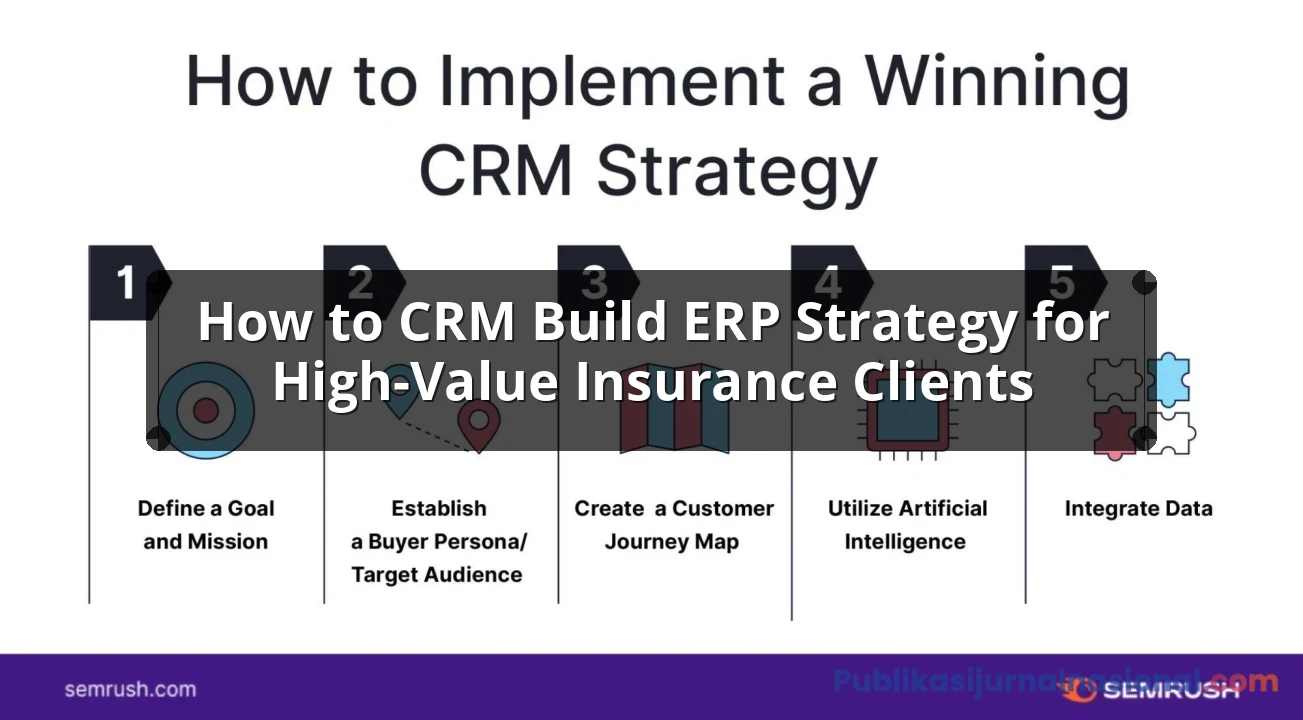
This guide will walk you through the critical steps involved in building such a strategy, focusing on the specific challenges and opportunities presented by high-value insurance clients. We’ll delve into the essential features of both CRM and ERP systems, explore how they can be integrated, and provide practical insights to help you choose the right solutions for your organization. Think of this as your roadmap to creating a competitive advantage in the insurance market, one high-value client at a time.
Understanding the Needs of High-Value Insurance Clients
High-value insurance clients are not like your average policyholders. They often have complex financial situations, unique risk profiles, and high expectations for service and personalization. Understanding their specific needs is the foundation of any successful CRM–ERP strategy.
Complex Risk Profiles
These clients often require specialized insurance coverage for high-value assets such as luxury homes, fine art collections, yachts, and private aircraft. Accurately assessing and managing these complex risks requires detailed data capture and analysis, which is where both CRM and ERP systems come into play. The CRM helps in gathering the initial information and understanding the client’s portfolio, while the ERP manages the financial aspects of the policies and claims.
Demand for Personalized Service
High-value clients expect a level of service that goes beyond the standard policy offerings. They want personalized attention, proactive communication, and tailored solutions that address their individual needs. A CRM system allows you to track client preferences, communication history, and specific requirements, enabling your team to provide a truly personalized experience. This includes automated reminders for policy renewals, personalized risk assessments, and proactive communication about potential coverage gaps.
Expectation of Seamless Communication
These clients value efficiency and responsiveness. They expect their insurance provider to be easily accessible and able to resolve their issues quickly and effectively. Integrating CRM with communication channels such as email, phone, and chat allows you to provide seamless, omnichannel support. An ERP integration ensures that all financial information related to their policies and claims is readily available to customer service representatives, enabling them to provide accurate and timely answers.
Key Features of CRM Systems for High-Value Insurance Clients
A robust CRM system is the cornerstone of your client relationship management strategy. It should provide a comprehensive view of each client, enabling your team to deliver exceptional service and build lasting relationships.
Contact Management
This is the foundation of any CRM system. It allows you to store and manage detailed information about each client, including contact details, communication history, and policy information. For high-value clients, it’s crucial to capture not just basic contact information but also details about their family, business interests, and personal preferences. This level of detail allows for highly personalized communication and service.
Lead Management
Identifying and nurturing potential high-value clients is crucial for growth. A CRM system can help you track leads, manage their interactions with your organization, and qualify them based on their potential value. This includes tracking website activity, email engagement, and phone conversations. By analyzing this data, you can identify the most promising leads and prioritize your sales efforts.
Sales Force Automation
Automating routine sales tasks can free up your team to focus on building relationships with clients. This includes automating email campaigns, scheduling appointments, and generating proposals. A CRM system can also provide insights into sales performance, allowing you to identify areas for improvement and optimize your sales process.
Reporting and Analytics
A CRM system should provide robust reporting and analytics capabilities, allowing you to track key performance indicators (KPIs) such as client retention rates, sales conversion rates, and customer satisfaction scores. This data can help you identify trends, measure the effectiveness of your marketing campaigns, and make informed decisions about your business strategy. For high-value clients, it’s particularly important to track metrics such as the average policy value, the number of claims filed, and the overall profitability of each client relationship.
Integration Capabilities
The ability to integrate with other systems, such as your ERP, is crucial for creating a seamless data flow and avoiding data silos. This integration allows you to share information between your CRM and ERP systems, such as client contact details, policy information, and claims data. This ensures that everyone in your organization has access to the most up-to-date information, enabling them to provide consistent and efficient service.
Essential ERP Features for Insurance Companies
An ERP system manages the core financial and operational processes of your insurance company. It’s essential for managing policies, claims, and financial reporting.
Policy Management
This module allows you to create, manage, and track insurance policies. It should include features such as policy creation, renewal, cancellation, and endorsement. For high-value clients, it’s important to have the ability to create customized policies that address their specific needs. The ERP should also provide tools for managing policy documentation and ensuring compliance with regulatory requirements.
Claims Management
Efficient claims processing is crucial for maintaining client satisfaction. An ERP system should automate the claims process, from initial claim submission to final settlement. This includes features such as claim assignment, investigation, adjudication, and payment. For high-value clients, it’s important to have a streamlined claims process that minimizes delays and provides prompt communication throughout the process.
Financial Management
This module manages the financial aspects of your insurance business, including accounting, budgeting, and financial reporting. It should provide accurate and timely financial information, allowing you to make informed decisions about your business strategy. For high-value clients, it’s important to track the profitability of each client relationship and ensure that you are pricing your policies appropriately.
Reporting and Analytics
An ERP system should provide robust reporting and analytics capabilities, allowing you to track key performance indicators (KPIs) such as premium revenue, claims costs, and expense ratios. This data can help you identify trends, measure the effectiveness of your business strategy, and make informed decisions about your business strategy. For high-value clients, it’s particularly important to track metrics such as the average policy value, the number of claims filed, and the overall profitability of each client relationship.
Compliance Management
The insurance industry is heavily regulated, and it’s crucial to ensure that your ERP system is compliant with all applicable regulations. This includes features such as data security, audit trails, and reporting capabilities. For high-value clients, it’s particularly important to ensure that their personal and financial information is protected.
Integrating CRM and ERP: A Strategic Imperative
The real power comes from integrating your CRM and ERP systems. This allows you to create a 360-degree view of each client, enabling your team to provide exceptional service and build lasting relationships.
Seamless Data Flow
Integrating CRM and ERP allows you to share information between the two systems, such as client contact details, policy information, and claims data. This ensures that everyone in your organization has access to the most up-to-date information, enabling them to provide consistent and efficient service. For example, when a client calls with a question about their policy, the customer service representative can quickly access their policy details from the ERP system and their communication history from the CRM system.
Improved Customer Service
By having a complete view of each client, your team can provide more personalized and responsive service. They can anticipate client needs, proactively address potential issues, and resolve problems quickly and effectively. For example, if a client files a claim, the customer service representative can track the progress of the claim in the ERP system and proactively communicate updates to the client.
Enhanced Sales and Marketing
Integrating CRM and ERP can also improve your sales and marketing efforts. By analyzing data from both systems, you can identify potential cross-selling and upselling opportunities. For example, if a client has a high-value home insurance policy, you can proactively offer them a high-value auto insurance policy. You can also use this data to personalize your marketing campaigns and target your messaging to specific client segments.
Choosing the Right CRM and ERP Solutions
Selecting the right CRM and ERP solutions is a critical decision. Consider the specific needs of your high-value insurance clients and your overall business goals.
Assess Your Needs
Before you start evaluating different solutions, take the time to assess your specific needs. What are your current pain points? What are your goals for implementing CRM and ERP? What are the specific requirements of your high-value insurance clients? By clearly defining your needs, you can narrow down your options and choose solutions that are the best fit for your organization.
Evaluate Different Vendors
There are many different CRM and ERP vendors on the market, each with its own strengths and weaknesses. Take the time to evaluate different vendors and compare their offerings. Consider factors such as functionality, price, ease of use, and customer support. Look for vendors with experience in the insurance industry and a proven track record of success.
Consider Cloud vs. On-Premise Solutions
You’ll also need to decide whether to deploy your CRM and ERP solutions in the cloud or on-premise. Cloud-based solutions offer several advantages, such as lower upfront costs, easier maintenance, and greater scalability. However, on-premise solutions may be a better fit for organizations with strict security requirements or a need for greater control over their data.
Prioritize Integration Capabilities
As mentioned earlier, integration is crucial for creating a seamless data flow between your CRM and ERP systems. Make sure that the solutions you choose offer robust integration capabilities. Look for solutions that have pre-built integrations or that offer APIs (Application Programming Interfaces) that allow you to build custom integrations.
Conclusion
Building a CRM–ERP strategy for high-value insurance clients is a significant investment, but it’s one that can pay off handsomely in terms of increased client loyalty, improved efficiency, and enhanced profitability. By understanding the unique needs of these clients, choosing the right CRM and ERP solutions, and integrating them effectively, you can create a competitive advantage in the insurance market.
Remember that this is an ongoing process. As your business evolves and your clients’ needs change, you’ll need to continuously evaluate and refine your CRM–ERP strategy. By staying focused on delivering exceptional service and building lasting relationships, you can ensure the long-term success of your high-value insurance business.
Ultimately, the successful integration of CRM and ERP is not just about technology; it’s about people, processes, and a commitment to providing the best possible service to your most valuable clients. By embracing this holistic approach, you can unlock the full potential of your CRM and ERP systems and achieve your business goals.
Frequently Asked Questions (FAQ) about How to CRM Build ERP Strategy for High-Value Insurance Clients
Why integrate CRM & ERP for insurance?
Integrating CRM and ERP centralizes client data for better service. This improves efficiency in managing policies, claims, and billing for high-value insurance clients. Enhanced data visibility leads to more informed decision-making.
How does CRM improve client retention?
CRM enables personalized communication based on client history. By understanding client needs, insurers can offer tailored products and proactive support. This CRM strategy boosts client satisfaction and long-term loyalty.
What ERP features benefit insurance clients?
ERP features like automated billing, claims processing, and financial reporting enhance operational efficiency. Accurate financial insights and streamlined processes improve client trust. This also reduces administrative overhead for the insurance company.