In the dynamic world of Fintech insurance, staying ahead of the curve requires more than just innovative products; it demands a seamless and efficient operational infrastructure. Two critical components of this infrastructure are Customer Relationship Management (CRM) and Enterprise Resource Planning (ERP) systems. While ERP focuses on internal processes and resource management, CRM concentrates on building and nurturing customer relationships. When these two systems are strategically integrated, the synergistic effect can significantly enhance efficiency, improve customer satisfaction, and drive business growth in the Fintech insurance sector.
However, simply implementing both CRM and ERP is not enough. To truly unlock their potential, Fintech insurance companies need to adopt specific CRM techniques that strengthen the ERP system. This involves understanding how data flows between the two systems, identifying key areas for improvement, and implementing strategies to optimize the customer experience while streamlining internal operations. Think of it like this: ERP provides the skeleton and vital organs of your business, while CRM is the circulatory system, ensuring everything is connected and nourished. Without a healthy circulatory system, even the strongest skeleton will struggle to function effectively.
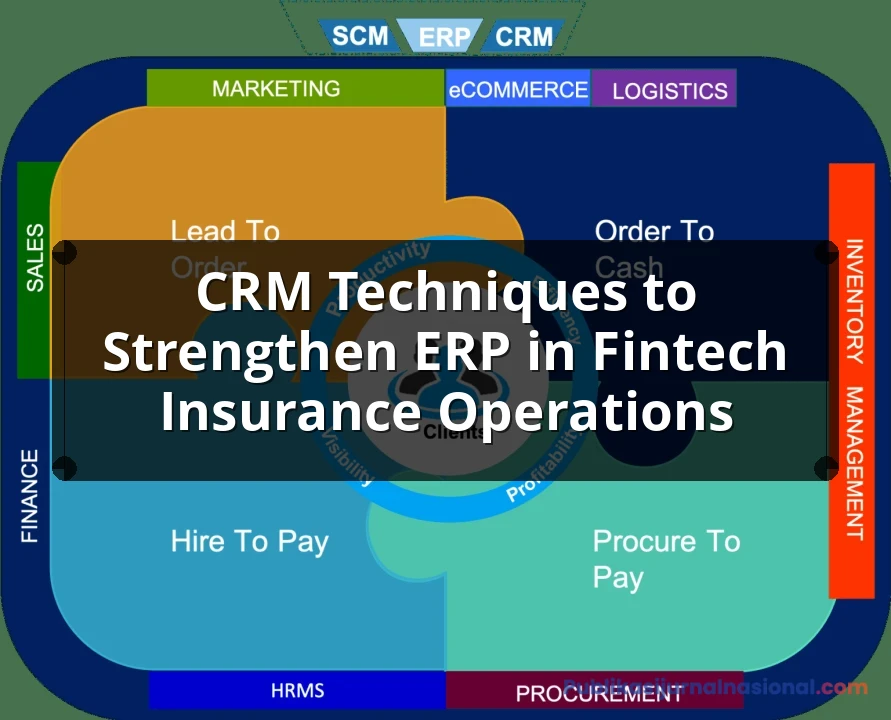
This article serves as a complete guide to understanding and implementing CRM techniques that strengthen ERP in Fintech insurance operations. We will explore the key features of both systems, delve into the specific challenges faced by Fintech insurance companies, and provide practical strategies for leveraging CRM to enhance ERP functionality. By the end of this guide, you will have a clear roadmap for optimizing your CRM and ERP integration to achieve greater efficiency, improved customer engagement, and increased profitability.
Understanding the Synergy: CRM and ERP in Fintech Insurance
CRM and ERP systems, while distinct in their primary functions, are intrinsically linked within a modern Fintech insurance operation. Think of ERP as the backbone, managing core processes like finance, accounting, claims processing, and policy administration. CRM, on the other hand, is the customer-facing arm, handling sales, marketing, customer service, and relationship management. The real power comes when these two systems talk to each other.
Key Features of CRM for Fintech Insurance
A robust CRM system for Fintech insurance should include:
- Lead Management: Tracking leads from initial contact through conversion, capturing relevant data for targeted marketing campaigns.
- Policy Sales Management: Managing the sales process, from quote generation to policy issuance, ensuring a smooth and efficient experience for both agents and customers.
- Customer Service and Support: Providing a centralized platform for handling customer inquiries, complaints, and claims, with integrated knowledge base and self-service options.
- Marketing Automation: Automating marketing tasks such as email campaigns, social media posting, and lead nurturing, allowing for personalized and targeted communication.
- Analytics and Reporting: Providing real-time insights into customer behavior, sales performance, and marketing effectiveness.
Key Features of ERP for Fintech Insurance
A comprehensive ERP system for Fintech insurance should include:
- Policy Administration: Managing policy details, renewals, and cancellations.
- Claims Processing: Automating the claims process from submission to settlement, reducing processing time and improving accuracy.
- Finance and Accounting: Managing financial transactions, generating financial reports, and ensuring compliance with regulatory requirements.
- Compliance Management: Tracking and managing compliance with industry regulations and internal policies.
- Actuarial Modeling: Supporting actuarial analysis and risk assessment.
Challenges in Integrating CRM and ERP in Fintech Insurance
While the benefits of integrating CRM and ERP are undeniable, the process is not without its challenges. Fintech insurance companies often face specific hurdles due to the complex nature of the industry and the rapid pace of technological change.
Data Silos and Inconsistent Data
One of the most common challenges is the existence of data silos. CRM and ERP systems often operate independently, leading to inconsistent data and a fragmented view of the customer. For example, a customer’s address may be updated in the CRM system but not in the ERP system, leading to errors in policy administration or claims processing. Maintaining data integrity and consistency across both systems is crucial.
Lack of Real-Time Visibility
Without proper integration, it can be difficult to gain real-time visibility into key business metrics. For example, sales managers may not have access to real-time data on policy renewals, making it difficult to proactively address potential cancellations. Similarly, customer service representatives may not have access to up-to-date claims information, leading to delays and frustration for customers.
Integration Complexity and Cost
Integrating CRM and ERP systems can be a complex and costly undertaking. It requires careful planning, technical expertise, and ongoing maintenance. Many Fintech insurance companies struggle to find the right resources and expertise to effectively integrate their systems. Legacy systems can further complicate the process.
Resistance to Change
Implementing new systems and processes can often be met with resistance from employees who are accustomed to existing workflows. It is important to communicate the benefits of integration clearly and provide adequate training to ensure a smooth transition. Change management is a critical component of any successful CRM and ERP integration project.
CRM Techniques to Strengthen ERP in Fintech Insurance
Overcoming these challenges requires a strategic approach to CRM implementation that focuses on strengthening the ERP system. Here are some key CRM techniques that can help Fintech insurance companies achieve greater efficiency, improved customer satisfaction, and increased profitability.
Centralized Data Management
Implement a centralized data management strategy to ensure data consistency and accuracy across both CRM and ERP systems. This may involve using a Master Data Management (MDM) system to create a single source of truth for customer data. Data validation and cleansing processes should be implemented to identify and correct errors. Regular data audits are also essential to maintain data quality over time. Think of it as building a robust and well-maintained database that serves as the single source of truth for all customer-related information.
Automated Data Synchronization
Automate the synchronization of data between CRM and ERP systems to eliminate manual data entry and reduce the risk of errors. This can be achieved through integration platforms or custom-built APIs. Real-time synchronization is ideal, but batch synchronization can also be effective depending on the specific needs of the business. For example, when a customer updates their address in the CRM system, the change should automatically be reflected in the ERP system.
Workflow Automation
Automate key workflows that span both CRM and ERP systems to streamline processes and improve efficiency. For example, the policy renewal process can be automated to trigger notifications in the CRM system when a policy is nearing its expiration date. The CRM system can then automatically generate a renewal quote and send it to the customer. Once the customer approves the renewal, the ERP system can automatically update the policy details.
Personalized Customer Communication
Leverage CRM data to personalize customer communication and improve engagement. By understanding customer preferences and needs, Fintech insurance companies can deliver targeted messages and offers that are more relevant and effective. For example, customers who have recently filed a claim can receive personalized communications providing updates on the status of their claim. This personalized approach can help build trust and loyalty.
Proactive Customer Service
Use CRM to identify potential customer issues and proactively address them before they escalate. For example, if a customer’s policy is about to lapse due to non-payment, the CRM system can automatically trigger a notification to the customer service team. The team can then reach out to the customer to understand the reason for the non-payment and offer assistance. This proactive approach can help prevent policy cancellations and improve customer retention.
Enhanced Reporting and Analytics
Integrate CRM and ERP data to create comprehensive reports and analytics that provide insights into key business metrics. For example, sales reports can be combined with financial data to analyze the profitability of different customer segments. Claims data can be combined with customer data to identify high-risk customers and develop targeted risk mitigation strategies. These insights can help Fintech insurance companies make more informed decisions and improve their overall performance.
Choosing the Right CRM and ERP Solutions
Selecting the right CRM and ERP solutions is critical for successful integration. Consider the following factors when evaluating different options.
Industry-Specific Functionality
Choose CRM and ERP solutions that are specifically designed for the Fintech insurance industry. These solutions will typically include features and functionality that are tailored to the unique needs of the industry, such as policy administration, claims processing, and compliance management.
Integration Capabilities
Ensure that the CRM and ERP solutions you choose can be easily integrated with each other. Look for solutions that offer pre-built integrations or open APIs that allow for custom integration. Consider the cost and complexity of integration when evaluating different options.
Scalability and Flexibility
Choose solutions that can scale to meet the growing needs of your business. The solutions should also be flexible enough to adapt to changing business requirements. Cloud-based solutions often offer greater scalability and flexibility than on-premise solutions.
Vendor Support and Training
Select vendors that offer comprehensive support and training services. The vendor should be able to provide assistance with implementation, integration, and ongoing maintenance. Adequate training is essential to ensure that employees can effectively use the new systems.
Conclusion
In conclusion, the strategic integration of CRM and ERP systems is essential for Fintech insurance companies seeking to optimize their operations and enhance customer engagement. By implementing the CRM techniques outlined in this guide, companies can strengthen their ERP systems, streamline processes, improve data accuracy, and deliver a superior customer experience. Remember that successful implementation requires careful planning, a clear understanding of business needs, and a commitment to ongoing maintenance and improvement. By embracing these principles, Fintech insurance companies can unlock the full potential of CRM and ERP integration and achieve sustainable growth in a competitive market.
The journey toward a fully integrated CRM and ERP system might seem daunting, but the rewards are well worth the effort. Think of it as an investment in the future of your Fintech insurance business. By taking the time to understand the nuances of each system and implementing a well-defined integration strategy, you can create a powerful platform that drives efficiency, improves customer satisfaction, and ultimately, boosts your bottom line.
Ultimately, the key to success lies in recognizing that CRM and ERP are not just separate systems, but rather two sides of the same coin. When they work together seamlessly, they create a powerful engine for growth and innovation in the dynamic world of Fintech insurance. So, take the first step today and begin your journey toward a more integrated and efficient future. Understanding this synergy, as explored in How To CRM Build ERP Strategy For High-Value, unlocks powerful engines.
Frequently Asked Questions (FAQ) about CRM Techniques to Strengthen ERP in Fintech Insurance Operations
How does CRM improve Fintech ERP?
CRM enhances ERP by providing enriched customer data. This data fuels better forecasting, personalized offerings, and improved service delivery in Fintech Insurance, leading to increased efficiency and profitability.
What CRM data benefits insurance ERP?
CRM provides customer purchase history, interaction logs, and preferences. This informs ERP resource allocation, allowing for optimized policy pricing, claims processing, and targeted marketing campaigns within Fintech insurance.
Why integrate CRM & ERP in Fintech?
Integrating CRM and ERP streamlines Fintech insurance operations. It eliminates data silos, automates workflows, and provides a 360-degree view of the customer, improving decision-making and operational efficiency.