In the fast-paced world of auto insurance, staying competitive requires more than just offering attractive premiums. It demands a seamless, customer-centric approach that optimizes every interaction, from initial quote to claims processing. Achieving this level of efficiency and customer satisfaction hinges on the strategic alignment of two critical systems: Customer Relationship Management (CRM) and Enterprise Resource Planning (ERP). CRM focuses on managing customer relationships and interactions, while ERP integrates core business processes like finance, operations, and human resources. When these two systems work in harmony, auto insurance companies can unlock significant benefits, including improved customer loyalty, reduced operational costs, and enhanced decision-making.
However, aligning CRM and ERP is not a simple plug-and-play exercise. It requires careful planning, a deep understanding of business processes, and a commitment to data integration. Many auto insurance companies struggle to achieve true alignment, leading to siloed data, inefficient workflows, and missed opportunities. This article provides a comprehensive guide to the smart ways to align your CRM and ERP strategy in the auto insurance industry, focusing on key features, practical details, and actionable insights.
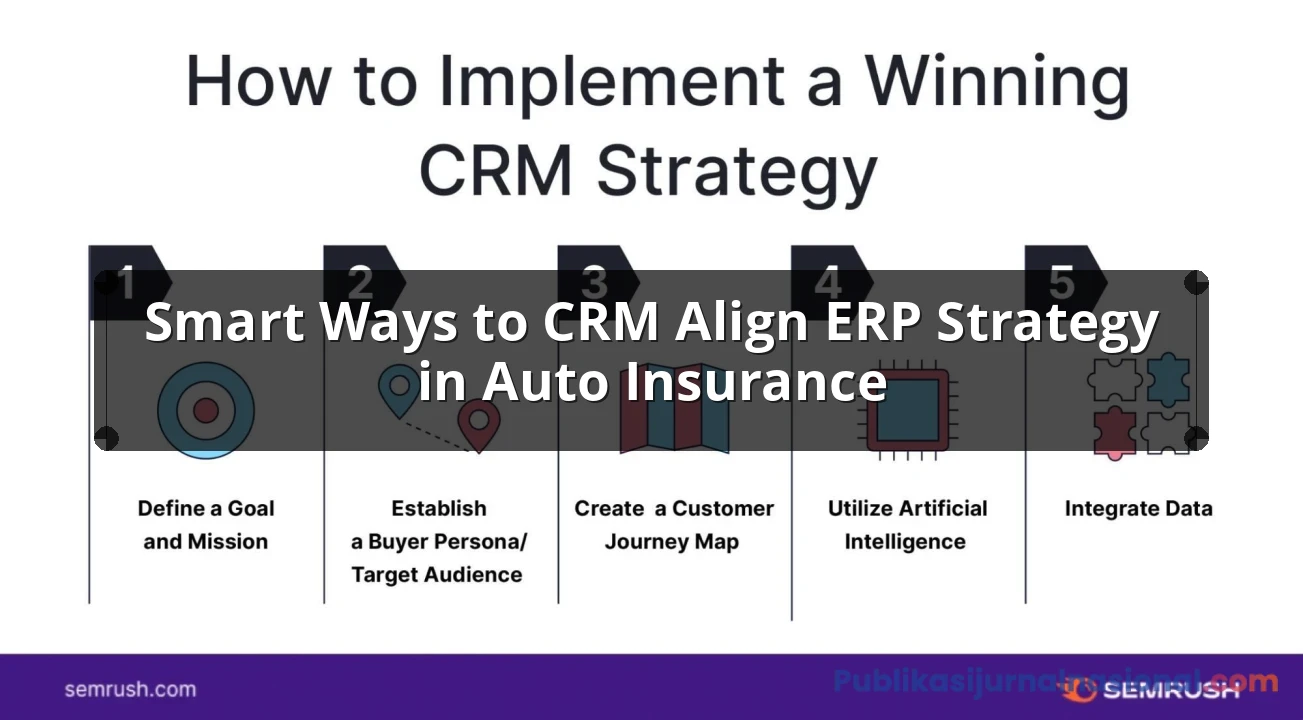
We’ll explore the benefits of CRM–ERP alignment, common challenges, and proven strategies for success. From selecting the right technology to establishing clear data governance policies, this guide will equip you with the knowledge and tools necessary to transform your auto insurance business into a customer-centric, data-driven organization. Get ready to dive into the world of integrated systems and discover how CRM and ERP can work together to drive growth and profitability in the competitive auto insurance landscape.
Understanding the Importance of CRM–ERP Alignment in Auto Insurance
The auto insurance industry is built on data and relationships. CRM and ERP systems manage vast amounts of information, from customer details and policy information to financial transactions and claims data. When these systems are disconnected, it creates a fragmented view of the business, hindering efficiency and impacting customer experience.
Improved Customer Experience
Aligned CRM and ERP systems enable a 360-degree view of the customer. Agents can access policy details, claims history, and payment information directly within the CRM, allowing them to provide personalized service and resolve issues quickly. For example, when a customer calls to report an accident, the agent can immediately access their policy information from the ERP system, verify coverage, and initiate the claims process, all within the CRM interface. This streamlined process reduces wait times and improves customer satisfaction.
Enhanced Operational Efficiency
By automating workflows and eliminating manual data entry, CRM–ERP alignment can significantly improve operational efficiency. For instance, when a new policy is created in the CRM, the data can be automatically transferred to the ERP system for billing and accounting purposes. Similarly, when a claim is filed, the information can be shared seamlessly between the two systems, ensuring that all relevant departments have access to the latest updates. This reduces errors, minimizes delays, and frees up employees to focus on more strategic tasks.
Data-Driven Decision Making
Integrated data from CRM and ERP provides valuable insights into customer behavior, market trends, and operational performance. By analyzing this data, auto insurance companies can identify opportunities to improve product offerings, optimize pricing strategies, and enhance marketing campaigns. For example, analyzing claims data in conjunction with customer demographics can help identify high-risk areas and tailor insurance products accordingly. This data-driven approach enables companies to make informed decisions and stay ahead of the competition.
Key Features to Look for in a CRM–ERP Integration for Auto Insurance
Choosing the right CRM and ERP systems, and ensuring they integrate effectively, is crucial for success. Here are some key features to look for:
Policy Management Integration
This feature allows agents to access policy details, coverage information, and premium payment history directly from the CRM. It enables them to answer customer inquiries quickly and accurately, and to upsell or cross-sell relevant products based on their individual needs. Real-time policy updates from the ERP to the CRM are essential for accurate information.
Claims Management Integration
This feature streamlines the claims process by providing a centralized view of all claims-related information. Agents can track the status of claims, access supporting documents, and communicate with adjusters, all within the CRM. Integration with the ERP system allows for automated claims processing and payment disbursement.
Billing and Payment Integration
This feature automates the billing and payment process, reducing manual errors and improving cash flow. Customers can view their billing statements, make payments online, and set up automatic payments through the CRM. Integration with the ERP system ensures that payments are accurately recorded and reconciled.
Reporting and Analytics
This feature provides comprehensive reporting and analytics capabilities, allowing auto insurance companies to track key performance indicators (KPIs) and identify areas for improvement. Reports can be generated on customer acquisition costs, retention rates, claims frequency, and profitability. This data-driven insight empowers companies to make informed decisions and optimize their business operations.
Lead Management and Marketing Automation
This feature allows companies to capture leads, nurture prospects, and automate marketing campaigns. Integration with the ERP system enables targeted marketing based on customer demographics, policy information, and claims history. For example, a company can send personalized email campaigns to customers who are nearing their policy renewal date, offering them exclusive discounts or additional coverage options.
Smart Strategies for CRM–ERP Alignment in Auto Insurance
Achieving true CRM–ERP alignment requires a strategic approach that addresses both technical and organizational challenges. Here are some smart strategies to consider:
Define Clear Business Goals and Objectives
Before embarking on a CRM–ERP integration project, it’s essential to define clear business goals and objectives. What are you hoping to achieve with the integration? Do you want to improve customer satisfaction, reduce operational costs, or enhance decision-making? By clearly defining your goals, you can ensure that the integration project is aligned with your overall business strategy.
Choose the Right Integration Approach
There are several different approaches to CRM–ERP integration, including point-to-point integration, middleware integration, and cloud-based integration. The best approach will depend on your specific needs and technical capabilities. Point-to-point integration involves directly connecting the CRM and ERP systems, which can be complex and costly. Middleware integration uses a third-party software to facilitate data exchange between the two systems. Cloud-based integration leverages cloud platforms to connect the CRM and ERP systems, offering greater flexibility and scalability.
Establish Data Governance Policies
Data quality is critical for the success of any CRM–ERP integration project. It’s essential to establish clear data governance policies to ensure that data is accurate, consistent, and up-to-date. This includes defining data standards, establishing data validation rules, and implementing data cleansing procedures. Data governance should be an ongoing process, not just a one-time effort.
Provide Comprehensive Training and Support
Even the best CRM–ERP integration will fail if employees are not properly trained on how to use the new system. It’s essential to provide comprehensive training and support to all users, ensuring that they understand the system’s features and benefits. Training should be tailored to different user roles and responsibilities. Ongoing support should be available to address any questions or issues that may arise.
Monitor and Measure Performance
After implementing the CRM–ERP integration, it’s important to monitor and measure performance to ensure that it’s delivering the expected benefits. Track key performance indicators (KPIs) such as customer satisfaction, operational efficiency, and sales growth. Regularly review the data and make adjustments as needed to optimize the system’s performance. This continuous improvement approach will help you maximize the return on your investment.
Common Challenges in CRM–ERP Alignment and How to Overcome Them
While the benefits of CRM–ERP alignment are significant, the process is not without its challenges. Here are some common pitfalls and strategies for overcoming them:
Data Silos and Inconsistent Data
Challenge: Disparate data sources and inconsistent data formats can hinder integration efforts and lead to inaccurate reporting.
Solution: Implement a robust data governance strategy, including data standardization, data validation, and data cleansing procedures. Invest in data integration tools that can transform and map data from different sources.
Lack of Executive Sponsorship
Challenge: Without strong support from senior management, CRM–ERP integration projects can lack the resources and prioritization needed for success.
Solution: Secure executive sponsorship by clearly articulating the business benefits of the integration and demonstrating how it aligns with the company’s strategic goals. Involve key stakeholders from all departments in the planning and implementation process.
Resistance to Change
Challenge: Employees may resist adopting new systems and processes, especially if they perceive them as disruptive or difficult to use.
Solution: Communicate the benefits of the integration to employees and involve them in the planning and testing phases. Provide comprehensive training and support to help them adapt to the new system. Address their concerns and provide opportunities for feedback.
Integration Complexity
Challenge: Integrating complex CRM and ERP systems can be technically challenging and time-consuming.
Solution: Choose an integration approach that aligns with your technical capabilities and budget. Consider using middleware or cloud-based integration platforms to simplify the process. Engage experienced consultants or integration partners to provide technical expertise and support. And for guidance, review How To CRM Build ERP Strategy For High-Value before deciding.
The Future of CRM–ERP Alignment in Auto Insurance
The future of CRM–ERP alignment in auto insurance is bright, with emerging technologies and trends poised to further enhance the benefits of integration. Here are some key areas to watch:
Artificial Intelligence (AI) and Machine Learning (ML)
AI and ML can be used to automate tasks, personalize customer interactions, and improve decision-making. For example, AI-powered chatbots can provide instant customer support, while ML algorithms can predict claims fraud and identify high-risk drivers. CRM and ERP systems will increasingly leverage AI and ML to deliver more personalized and efficient services.
Internet of Things (IoT)
The IoT is transforming the auto insurance industry by providing access to real-time data from connected vehicles. This data can be used to monitor driving behavior, detect accidents, and provide personalized insurance rates. Integrating IoT data with CRM and ERP systems will enable auto insurance companies to offer more innovative and customized products and services.
Cloud Computing
Cloud computing is becoming the preferred deployment model for CRM and ERP systems, offering greater flexibility, scalability, and cost-effectiveness. Cloud-based integration platforms will further simplify the process of connecting CRM and ERP systems, enabling auto insurance companies to quickly adapt to changing market conditions.
By embracing these emerging technologies and trends, auto insurance companies can unlock the full potential of CRM–ERP alignment and gain a competitive edge in the marketplace. The key is to stay informed, adapt to change, and continuously strive to improve customer experience and operational efficiency.
Frequently Asked Questions (FAQ) about Smart Ways to CRM Align ERP Strategy in Auto Insurance
Why align CRM & ERP in auto insurance?
Aligning CRM and ERP enhances customer experience and operational efficiency. This integration streamlines data flow for better insights and faster claims processing, leading to improved customer satisfaction and reduced costs in auto insurance.
How does CRM-ERP integration improve claims?
CRM-ERP integration provides a unified view of customer data for faster claims resolution. This allows auto insurance adjusters to quickly access policy details and payment history, speeding up the entire claims process and improving accuracy.
What are benefits of unified data in auto insurance?
Unified data from CRM and ERP helps auto insurance companies personalize customer interactions. This leads to more targeted marketing campaigns, improved customer retention, and a better understanding of customer needs and risk profiles.