In the fast-paced world of global insurance, staying competitive means embracing efficiency and automation. For years, Enterprise Resource Planning (ERP) systems have served as the backbone for managing financials, operations, and human resources. However, ERP systems, on their own, often lack the customer-centric focus needed to truly thrive. That’s where Customer Relationship Management (CRM) comes into play. By integrating CRM with ERP, global insurance brands can unlock a powerful synergy that drives automation, enhances customer experiences, and ultimately boosts the bottom line.
Think of your ERP system as the engine of your insurance company – meticulously tracking policies, claims, and financial transactions. Now, imagine CRM as the navigation system, guiding your sales and service teams with real-time customer insights. When these two systems work in harmony, you gain a 360-degree view of your customers, enabling personalized interactions, streamlined processes, and data-driven decision-making. This is especially crucial for global insurance brands dealing with diverse customer segments and complex regulatory landscapes.
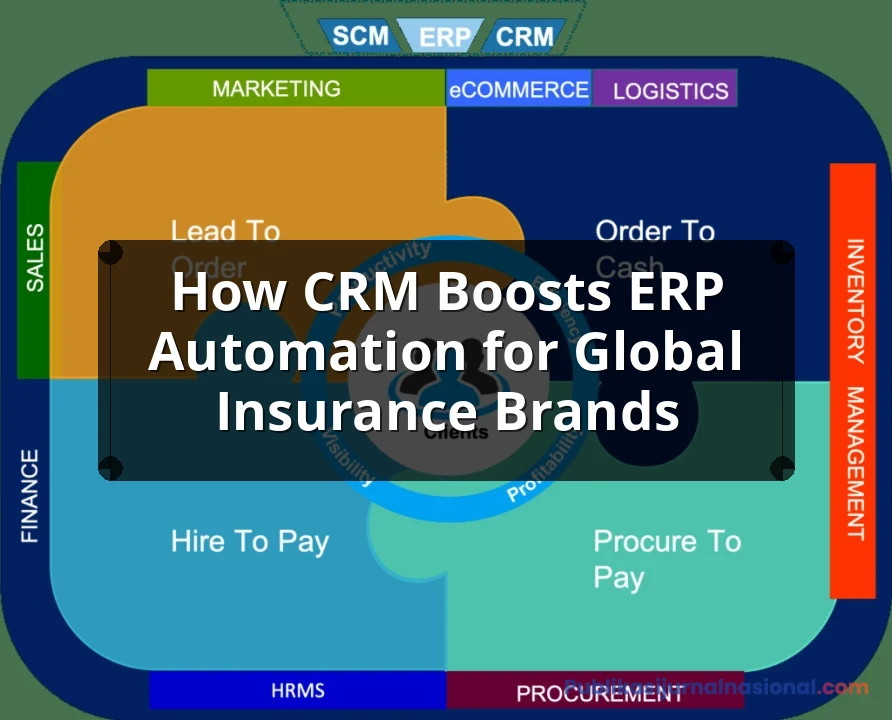
This guide will delve into how CRM boosts ERP automation for global insurance brands. We’ll explore the key features and benefits of this integration, address common challenges, and provide practical insights on how to implement a successful CRM–ERP strategy. Whether you’re a seasoned IT professional or a business leader exploring new ways to optimize your insurance operations, this article will provide you with the knowledge and tools you need to succeed.
Understanding the Core Components: CRM and ERP in Insurance
Before diving into the synergy, let’s clarify the individual roles of CRM and ERP within the insurance industry. Understanding their distinct functions is crucial for appreciating the power of their integration.
Customer Relationship Management (CRM)
CRM systems are designed to manage and analyze customer interactions and data throughout the customer lifecycle. In the insurance context, this includes:
- Lead Management: Capturing and nurturing potential customers through various channels.
- Sales Automation: Streamlining the sales process, from quoting to policy issuance.
- Customer Service: Providing efficient support and resolving customer inquiries.
- Marketing Automation: Personalizing marketing campaigns based on customer data.
- Customer Data Management: Centralizing customer information for a unified view.
A well-implemented CRM empowers insurance agents to build stronger relationships with customers, understand their needs, and provide tailored solutions. It fosters customer loyalty, reduces churn, and drives revenue growth.
Enterprise Resource Planning (ERP)
ERP systems are comprehensive software solutions that integrate various business functions into a centralized database. For insurance companies, ERP typically manages:
- Financial Management: Accounting, budgeting, and financial reporting.
- Claims Processing: Automating claims submission, adjudication, and payment.
- Policy Administration: Managing policy issuance, renewals, and endorsements.
- Regulatory Compliance: Ensuring adherence to industry regulations and reporting requirements.
- Human Resources: Managing employee data, payroll, and benefits.
ERP systems provide a single source of truth for operational data, enabling insurance companies to improve efficiency, reduce costs, and make informed decisions. However, without CRM integration, ERP can feel detached from the customer experience.
How CRM Boosts ERP Automation in Insurance
The real magic happens when CRM and ERP are integrated. This integration unlocks a range of benefits that significantly enhance automation and efficiency for global insurance brands.
Streamlined Claims Processing
Integrating CRM with ERP allows for seamless data flow between the front-end customer interaction and the back-end claims processing system. When a customer files a claim through the CRM portal, the information is automatically transferred to the ERP system, triggering the claims process. This eliminates manual data entry, reduces errors, and accelerates the claims settlement timeline.
For example, if a customer reports a car accident through the CRM mobile app, the claim details, photos, and supporting documents are automatically uploaded to the ERP system. The claims adjuster can then access this information directly, verify policy details, and initiate the investigation process without delay. This not only improves customer satisfaction but also reduces administrative overhead.
Automated Policy Management
CRM provides agents with real-time access to policy information stored in the ERP system. This allows them to quickly answer customer inquiries, process policy changes, and manage renewals efficiently. When a customer requests a policy change through the CRM system, the update is automatically reflected in the ERP system, ensuring data consistency and accuracy.
Consider a scenario where a customer needs to update their address. With CRM–ERP integration, the agent can quickly update the address in the CRM system, which automatically updates the policy information in the ERP system. This eliminates the need for manual data entry and reduces the risk of errors. Furthermore, the system can automatically generate updated policy documents and send them to the customer.
Personalized Customer Interactions
By integrating CRM with ERP, insurance companies gain a 360-degree view of their customers, including their policy history, claims history, and interaction history. This enables agents to provide personalized service and tailored recommendations. For instance, if a customer has a history of filing claims for flood damage, the agent can proactively offer them flood insurance coverage during the renewal process.
The CRM system can also leverage customer data from the ERP system to segment customers based on their risk profiles and preferences. This allows insurance companies to target specific customer segments with personalized marketing campaigns and product offerings. For example, customers with a low-risk profile can be offered discounts on their premiums, while customers with a high-risk profile can be offered additional coverage options.
Improved Regulatory Compliance
The insurance industry is heavily regulated, and compliance is paramount. CRM–ERP integration helps insurance companies meet regulatory requirements by providing a centralized repository of customer data and ensuring data accuracy and consistency. The system can automatically generate reports required by regulatory agencies, reducing the risk of non-compliance.
For example, the system can track all customer interactions and policy changes, providing an audit trail for regulatory compliance purposes. It can also automatically generate reports on key performance indicators (KPIs) such as claims processing time and customer satisfaction, allowing insurance companies to monitor their performance and identify areas for improvement.
Enhanced Data-Driven Decision Making
Integrating CRM with ERP provides insurance companies with access to a wealth of data that can be used to make informed decisions. By analyzing customer data, claims data, and policy data, insurance companies can identify trends, predict future risks, and optimize their business operations. This data-driven approach enables them to improve profitability, reduce costs, and enhance customer satisfaction.
For example, by analyzing claims data, insurance companies can identify areas where they are experiencing a high number of claims and take steps to mitigate those risks. They can also use customer data to identify new market opportunities and develop innovative products and services.
Key Features of a Successful CRM–ERP Integration for Insurance
To maximize the benefits of CRM–ERP integration, global insurance brands should look for certain key features in their chosen solutions:
Real-Time Data Synchronization
Data should flow seamlessly between the CRM and ERP systems in real-time. This ensures that agents and employees have access to the most up-to-date information, regardless of which system they are using.
Customizable Workflows
The system should allow for the creation of customized workflows that automate specific business processes. This can include automating claims processing, policy renewals, and customer onboarding.
Reporting and Analytics
The system should provide robust reporting and analytics capabilities, allowing insurance companies to track key performance indicators (KPIs) and identify areas for improvement.
Mobile Accessibility
Agents and employees should be able to access the CRM and ERP systems from their mobile devices. This allows them to provide better service to customers, regardless of their location.
Security and Compliance
The system should be secure and compliant with industry regulations. This includes protecting customer data and ensuring data privacy.
Challenges and Considerations for Implementation
While the benefits of CRM–ERP integration are significant, there are also challenges that insurance companies should be aware of during implementation:
Data Migration
Migrating data from legacy systems to the new CRM and ERP systems can be a complex and time-consuming process. It’s crucial to ensure data accuracy and consistency during the migration process.
Integration Complexity
Integrating different CRM and ERP systems can be technically challenging, especially if they are from different vendors. Careful planning and execution are essential to ensure a successful integration.
User Adoption
Getting employees to adopt the new CRM and ERP systems can be a challenge. Training and support are essential to ensure that employees are comfortable using the new systems.
Cost
Implementing CRM and ERP systems can be expensive, especially for global insurance brands. It’s important to carefully evaluate the costs and benefits before making a decision.
Best Practices for a Successful CRM–ERP Integration
To ensure a successful CRM–ERP integration, consider these best practices:
- Define clear goals and objectives: What do you want to achieve with the integration?
- Choose the right solutions: Select CRM and ERP systems that are compatible and meet your specific needs.
- Develop a detailed implementation plan: Outline the steps involved in the integration process.
- Involve key stakeholders: Get input from all departments that will be affected by the integration.
- Provide thorough training and support: Ensure that employees are properly trained on the new systems.
- Monitor and evaluate the results: Track key performance indicators (KPIs) to measure the success of the integration.
Conclusion
In conclusion, integrating CRM with ERP is a strategic imperative for global insurance brands looking to enhance automation, improve customer experiences, and drive growth. By streamlining claims processing, automating policy management, personalizing customer interactions, improving regulatory compliance, and enhancing data-driven decision-making, CRM–ERP integration can provide a significant competitive advantage. While there are challenges to overcome, the benefits far outweigh the risks. By following best practices and choosing the right solutions, insurance companies can unlock the full potential of CRM–ERP integration and achieve their business goals.
Frequently Asked Questions (FAQ) about How CRM Boosts ERP Automation for Global Insurance Brands
How does CRM improve insurance ERP?
CRM enhances ERP automation by centralizing customer data. This improved data flow streamlines policy management, claims processing, and customer service, leading to faster and more efficient operations.
What are CRM benefits for insurance?
CRM for insurance improves customer relationships and boosts sales. It enables personalized communication, targeted marketing, and efficient lead management, ultimately increasing customer retention and revenue.
Why automate insurance processes?
Automating insurance processes reduces manual errors and operational costs. ERP automation, driven by CRM insights, speeds up underwriting, claims, and policy administration, improving efficiency and customer satisfaction.