The insurance industry, while built on trust and personal relationships, is increasingly reliant on efficient operational processes. For insurance brokers, managing customer interactions, policy administration, and financial transactions can become overwhelmingly complex. This is where the synergy between Customer Relationship Management (CRM) and Enterprise Resource Planning (ERP) systems becomes crucial. By integrating these systems, brokers can streamline workflows, enhance customer service, and ultimately, boost profitability.
Many insurance brokers still rely on disparate systems and manual processes, leading to data silos, errors, and inefficiencies. Imagine spending hours manually entering customer data into multiple systems, only to find inconsistencies later. Or struggling to reconcile policy information with accounting records. These challenges not only waste valuable time but also hinder the ability to provide timely and personalized service to clients. A well-integrated CRM–ERP solution provides a single source of truth, automating tasks and providing real-time visibility into all aspects of the business.
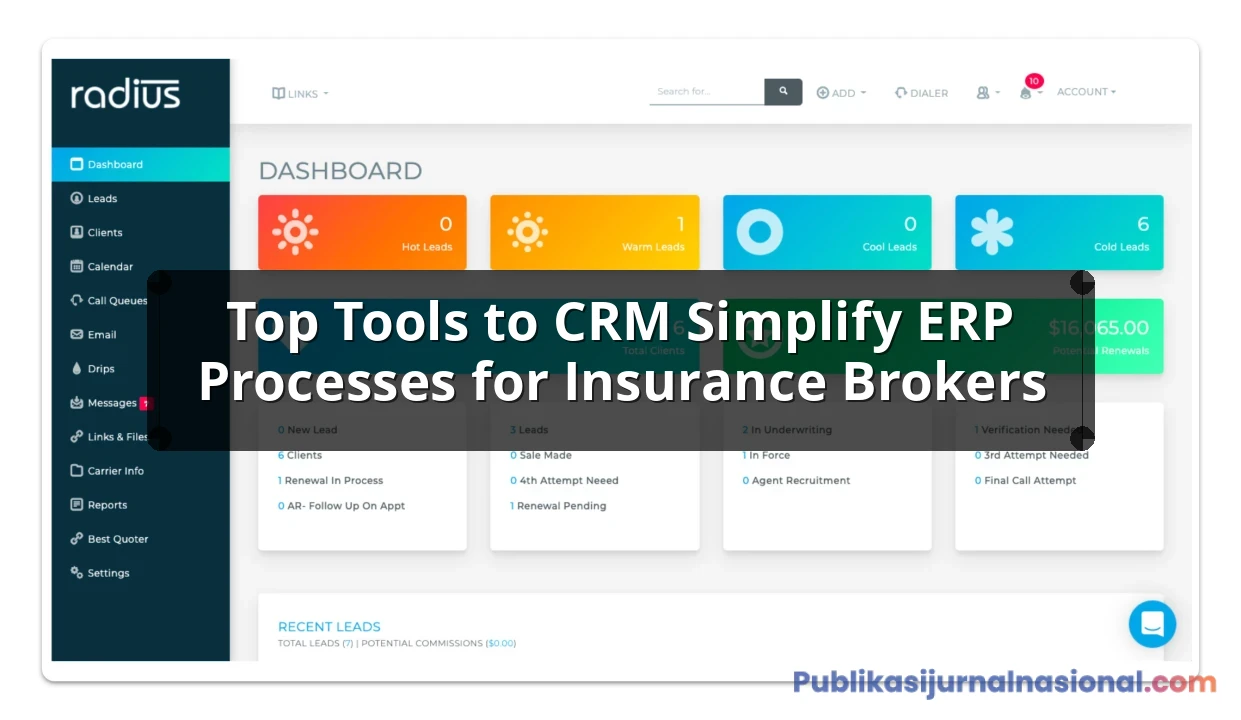
This article will delve into the top tools available to CRM simplify ERP processes for insurance brokers. We’ll explore the key features to look for, the benefits of integration, and real-world examples of how these tools can transform your brokerage. Whether you’re just starting to explore CRM and ERP solutions or looking to optimize your existing systems, this guide will provide the information you need to make informed decisions and unlock the full potential of your business.
Understanding the Need for CRM and ERP Integration in Insurance Broking
Insurance broking involves a complex interplay of customer management, policy administration, financial accounting, and regulatory compliance. Without integrated systems, these functions often operate in silos, leading to inefficiencies and errors. CRM and ERP systems, when integrated, create a unified platform that streamlines these processes and provides a holistic view of the business.
The Role of CRM in Insurance Broking
CRM systems are primarily focused on managing customer interactions and relationships. For insurance brokers, this includes:
- Lead Management: Capturing and nurturing potential clients through various channels.
- Client Communication: Tracking all interactions with clients, including emails, calls, and meetings.
- Policy Management: Storing and managing policy details, renewals, and claims information.
- Sales Automation: Automating sales processes, such as quoting and proposal generation.
- Customer Service: Providing efficient and personalized customer support.
The Role of ERP in Insurance Broking
ERP systems, on the other hand, focus on managing the internal operations of the business, including:
- Financial Management: Managing accounting, budgeting, and financial reporting.
- Human Resources: Managing employee information, payroll, and benefits.
- Policy Administration: Automating policy issuance, renewals, and cancellations. (Note: This can overlap with CRM, highlighting the need for integration)
- Commission Management: Tracking and calculating broker commissions.
- Compliance Management: Ensuring adherence to regulatory requirements.
Benefits of Integrated CRM and ERP Systems
Integrating CRM and ERP systems offers numerous benefits to insurance brokers:
- Improved Data Accuracy: Eliminating data silos and ensuring consistent information across all systems.
- Increased Efficiency: Automating tasks and streamlining workflows, freeing up time for brokers to focus on client relationships.
- Enhanced Customer Service: Providing brokers with a 360-degree view of the client, enabling them to provide personalized service.
- Better Decision-Making: Accessing real-time data and insights to make informed business decisions.
- Reduced Costs: Optimizing operations and reducing manual errors, leading to cost savings.
Top Tools to CRM Simplify ERP Processes for Insurance Brokers
Several CRM and ERP systems cater specifically to the needs of insurance brokers. Here are some of the top tools, along with their key features and benefits:
1. Salesforce Financial Services Cloud
Salesforce Financial Services Cloud is a leading CRM platform designed for the financial services industry, including insurance. It offers a comprehensive suite of features for managing client relationships, automating sales processes, and providing personalized service.
- Key Features:
- Client Relationship Management: Centralized view of client data, including contact information, policy details, and interactions.
- Lead Management: Tools for capturing and nurturing leads, including automated email marketing and lead scoring.
- Policy Management: Ability to store and manage policy information, renewals, and claims data.
- Analytics and Reporting: Real-time dashboards and reports for tracking key performance indicators (KPIs).
- Integration with ERP Systems: Seamless integration with leading ERP systems, such as NetSuite and SAP.
- Benefits for Insurance Brokers:
- Improved client relationships
- Increased sales productivity
- Enhanced customer service
- Better data visibility
2. Microsoft Dynamics 365 for Sales
Microsoft Dynamics 365 for Sales is another popular CRM platform that offers a wide range of features for managing sales, marketing, and customer service. It can be customized to meet the specific needs of insurance brokers.
- Key Features:
- Sales Automation: Automates sales processes, such as lead management, opportunity tracking, and quoting.
- Marketing Automation: Tools for creating and managing marketing campaigns, including email marketing and social media marketing.
- Customer Service: Provides a unified platform for managing customer service inquiries and resolving issues.
- Integration with Microsoft Ecosystem: Seamless integration with other Microsoft products, such as Office 365 and Power BI.
- Integration with ERP Systems: Integration with Microsoft Dynamics 365 Finance and Operations.
- Benefits for Insurance Brokers:
- Streamlined sales processes
- Improved marketing effectiveness
- Enhanced customer satisfaction
- Better data analysis
3. Vertafore AMS360
Vertafore AMS360 is a widely used agency management system specifically designed for independent insurance agencies and brokers. It combines CRM and ERP functionalities into a single platform.
- Key Features:
- Policy Management: Comprehensive policy management features, including policy issuance, renewals, and endorsements.
- Accounting: Integrated accounting module for managing financial transactions, including invoicing and payments.
- Customer Relationship Management: Tools for managing client relationships, including contact management and communication tracking.
- Reporting: Robust reporting capabilities for tracking key performance indicators (KPIs).
- Carrier Connectivity: Seamless integration with insurance carriers for policy quoting and submission.
- Benefits for Insurance Brokers:
- Increased efficiency
- Improved accuracy
- Enhanced customer service
- Better compliance
4. Applied Epic
Applied Epic is another leading agency management system that offers a comprehensive suite of features for managing all aspects of an insurance brokerage, from CRM to accounting.
- Key Features:
- Client Management: Robust client management features, including contact management, policy tracking, and communication logging.
- Policy Administration: Streamlined policy administration processes, including policy issuance, renewals, and endorsements.
- Accounting: Integrated accounting module for managing financial transactions, including invoicing, payments, and reporting.
- Reporting and Analytics: Comprehensive reporting and analytics capabilities for tracking key performance indicators (KPIs).
- Automation: Automation of key processes, such as policy renewals and claims processing.
- Benefits for Insurance Brokers:
- Improved operational efficiency
- Enhanced customer experience
- Better data-driven decision-making
- Increased profitability
5. NetSuite
While not insurance-specific out-of-the-box, NetSuite is a powerful cloud-based ERP system that can be customized to meet the needs of insurance brokers. It offers a wide range of modules, including financial management, CRM, and supply chain management.
- Key Features:
- Financial Management: Comprehensive financial management capabilities, including accounting, budgeting, and financial reporting.
- CRM: Integrated CRM module for managing customer relationships, sales, and marketing.
- Inventory Management: (Less relevant for most brokers, but can be useful if selling related products)
- Reporting and Analytics: Real-time dashboards and reports for tracking key performance indicators (KPIs).
- Customization: Highly customizable to meet the specific needs of insurance brokers.
- Benefits for Insurance Brokers:
- Centralized data management
- Improved operational efficiency
- Better decision-making
- Scalability
Choosing the Right CRM–ERP Solution
Selecting the right CRM–ERP solution for your insurance brokerage is a critical decision. Here are some factors to consider:
Business Needs and Requirements
Start by identifying your specific business needs and requirements. What are your biggest pain points? What processes do you want to streamline? What data do you need to track? Consider your current and future needs, as well as your budget.
Integration Capabilities
Ensure that the CRM and ERP systems you choose can be easily integrated. Look for systems that offer pre-built integrations or APIs that allow for seamless data exchange. Consider the other systems you use, such as email marketing platforms and payment gateways, and ensure that they can also be integrated.
Ease of Use
Choose systems that are user-friendly and easy to learn. Consider the technical skills of your staff and provide adequate training. A system that is difficult to use will not be adopted by your team and will not deliver the expected benefits.
Scalability
Select systems that can scale with your business. As your brokerage grows, you will need systems that can handle increasing data volumes and user numbers. Consider cloud-based solutions that offer scalability and flexibility.
Vendor Support
Choose vendors that offer excellent customer support. You will need assistance with implementation, training, and ongoing maintenance. Look for vendors with a proven track record and a reputation for providing responsive and helpful support.
Implementation and Training
Implementing a new CRM–ERP system can be a complex process. Here are some tips for successful implementation:
Plan Carefully
Develop a detailed implementation plan that outlines the scope of the project, timelines, and resources. Identify key stakeholders and assign responsibilities. Communicate the plan to your team and get their buy-in.
Data Migration
Carefully plan the migration of your existing data to the new system. Clean and validate your data before migrating it to ensure accuracy. Consider using data migration tools to automate the process.
Training
Provide adequate training to your staff on how to use the new systems. Offer both classroom training and online resources. Encourage your team to ask questions and provide feedback.
Go-Live and Support
Plan a phased go-live approach, starting with a small group of users. Monitor the system closely after go-live and provide ongoing support to your team. Address any issues promptly and make adjustments as needed.
Conclusion
Integrating CRM and ERP systems is essential for insurance brokers looking to streamline operations, enhance customer service, and boost profitability. By choosing the right tools and implementing them effectively, brokers can transform their businesses and gain a competitive advantage in today’s dynamic market. Remember to carefully assess your business needs, choose systems that offer seamless integration and scalability, and provide adequate training to your team. With the right approach, you can unlock the full potential of CRM and ERP integration and achieve significant improvements in efficiency, customer satisfaction, and profitability.
Frequently Asked Questions (FAQ) about Top Tools to CRM Simplify ERP Processes for Insurance Brokers
What CRM tools help insurance brokers?
Leading CRM tools like Salesforce and Microsoft Dynamics 365 automate client interactions and manage policy details efficiently. These platforms centralize data, improving customer service and sales processes for insurance brokers.
How does ERP improve insurance processes?
ERP systems streamline back-office tasks such as accounting, compliance, and reporting for insurance brokers. This automation reduces errors, improves data accuracy, and frees up time for client-focused activities.
Why integrate CRM and ERP for insurance?
Integrating CRM and ERP creates a unified platform for insurance brokers, bridging front-end sales with back-end operations. This integration enhances data visibility, improves decision-making, and boosts overall efficiency.