In the competitive landscape of insurance technology, optimizing profitability is paramount. While Enterprise Resource Planning (ERP) systems provide a robust backbone for managing core business functions like finance, HR, and operations, their true potential is often unlocked when seamlessly integrated with Customer Relationship Management (CRM) systems. This synergy allows for a holistic view of the customer journey, improved data-driven decision-making, and ultimately, increased revenue. This article delves into practical CRM hacks that can significantly boost the profitability of your ERP system within the insurance technology sector.
Many insurance companies invest heavily in ERP and CRM systems independently, failing to realize the powerful benefits of integration. Siloed data leads to fragmented customer experiences, inefficient processes, and missed opportunities for cross-selling and upselling. Imagine a scenario where your claims department isn’t aware of a customer’s recent policy upgrade, or your marketing team sends irrelevant offers due to outdated customer information. These inefficiencies directly impact profitability and customer satisfaction. By strategically leveraging CRM data within your ERP system, you can bridge these gaps and create a more streamlined and profitable operation.
This guide provides a comprehensive overview of actionable CRM hacks designed to maximize the ROI of your ERP investment. We will explore key features, practical details, and real-world examples to illustrate how these strategies can be implemented within your insurance technology organization. From lead generation and policy management to claims processing and customer retention, we will cover a range of areas where CRM and ERP integration can drive significant improvements. Get ready to transform your data silos into a powerful, unified system that fuels growth and profitability.
Understanding the Synergy: CRM and ERP in Insurance Technology
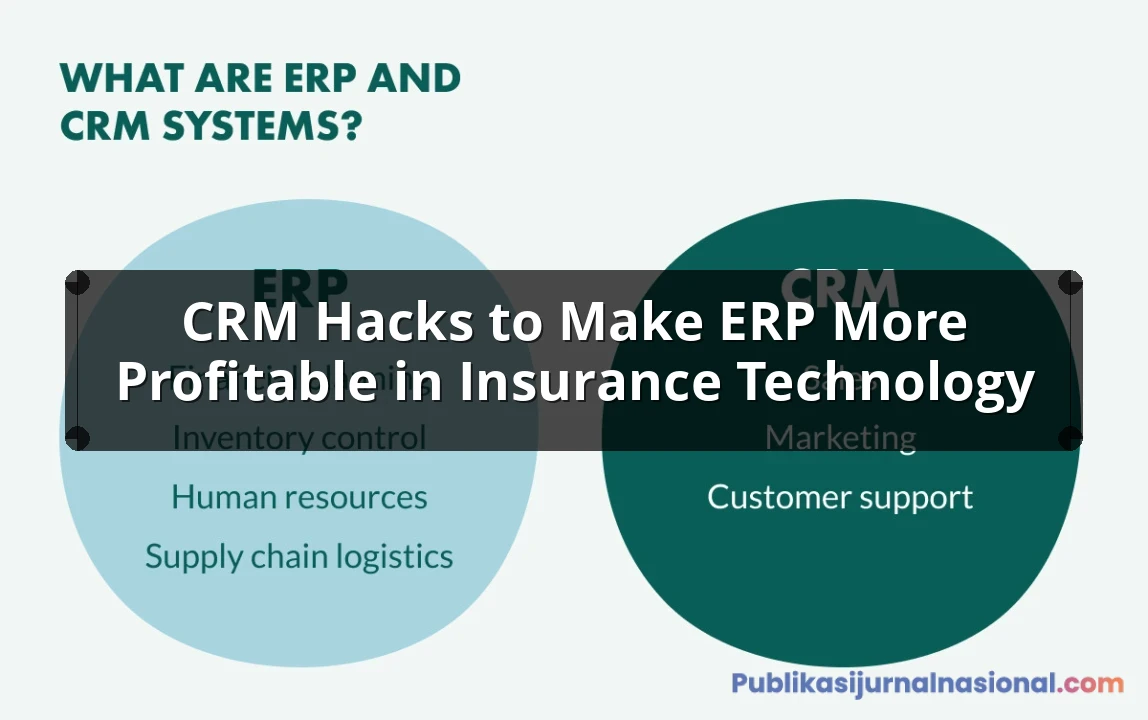
The insurance industry is characterized by complex processes, regulatory compliance, and a strong focus on customer relationships. Both CRM and ERP systems play crucial roles in navigating these challenges. CRM systems are designed to manage customer interactions, sales processes, and marketing campaigns, while ERP systems handle back-office operations like finance, accounting, and human resources. When integrated effectively, these systems create a unified platform that provides a 360-degree view of the customer and the business.
Key Benefits of CRM–ERP Integration
Integrating your CRM and ERP systems offers a multitude of benefits, including:
- Improved Customer Experience: Access to a unified customer profile allows for personalized interactions and faster resolution of issues.
- Enhanced Sales Efficiency: Streamlined sales processes, automated lead management, and improved quote generation lead to increased sales conversion rates.
- Optimized Marketing Campaigns: Data-driven insights enable targeted marketing campaigns that resonate with customers and generate higher ROI.
- Streamlined Operations: Automated workflows and data synchronization reduce manual errors and improve operational efficiency.
- Better Decision-Making: Real-time data visibility provides valuable insights for strategic decision-making and performance monitoring.
- Increased Profitability: By improving efficiency, enhancing customer satisfaction, and driving sales growth, CRM–ERP integration directly contributes to increased profitability.
CRM Hacks to Maximize ERP Profitability
Now, let’s dive into specific CRM hacks that can significantly boost the profitability of your ERP system within the insurance technology context:
1. Centralized Customer Data: The Foundation of Success
The cornerstone of any successful CRM–ERP integration is a centralized customer database. This means consolidating customer data from various sources, including CRM, ERP, policy administration systems, and claims management systems, into a single, unified view. This single source of truth eliminates data silos, reduces redundancy, and ensures that everyone in the organization has access to the most accurate and up-to-date information.
Implementation Details
- Data Cleansing and Standardization: Before integrating data, it’s crucial to cleanse and standardize it to ensure consistency and accuracy. This involves removing duplicates, correcting errors, and standardizing data formats.
- Data Mapping and Transformation: Map the data fields from your CRM and ERP systems to ensure that data is transferred correctly. Transformation may be necessary to align data formats and values.
- Real-Time Synchronization: Implement real-time data synchronization to ensure that changes made in one system are immediately reflected in the other. This eliminates delays and ensures that everyone is working with the latest information.
2. Automate Lead Management and Policy Onboarding
Automating lead management and policy onboarding processes can significantly improve efficiency and reduce manual effort. By integrating your CRM with your ERP system, you can automate the entire lead-to-policy lifecycle, from initial lead capture to policy issuance and premium billing.
Implementation Details
- Lead Capture and Qualification: Automatically capture leads from various sources, such as website forms, marketing campaigns, and social media. Use CRM features to qualify leads based on predefined criteria.
- Automated Lead Nurturing: Implement automated lead nurturing campaigns to engage prospects with relevant content and guide them through the sales funnel.
- Policy Quoting and Generation: Integrate your CRM with your ERP system to automatically generate policy quotes based on customer information and risk profiles.
- Automated Policy Issuance: Automate the policy issuance process, including document generation, e-signature collection, and policy delivery.
- Premium Billing and Payment: Integrate your CRM with your ERP system to automate premium billing and payment processing.
3. Enhance Claims Processing with CRM Data
Claims processing is a critical area where CRM–ERP integration can deliver significant benefits. By integrating CRM data into the claims process, you can improve customer satisfaction, reduce fraud, and streamline claims handling.
Implementation Details
- Customer Identification and Verification: Use CRM data to quickly identify and verify customers during the claims process.
- Claims History and Policy Information: Access customer claims history and policy information directly from the CRM system.
- Automated Claims Routing: Route claims to the appropriate adjuster based on customer information, policy type, and claim complexity.
- Proactive Communication: Use CRM features to proactively communicate with customers throughout the claims process, providing updates and addressing concerns.
- Fraud Detection: Integrate CRM data with fraud detection systems to identify suspicious claims patterns.
4. Personalize Customer Communication and Marketing
Personalized communication is key to building strong customer relationships and driving customer loyalty. By leveraging CRM data within your ERP system, you can personalize customer communication and marketing campaigns to resonate with individual needs and preferences.
Implementation Details
- Segmentation and Targeting: Segment your customer base based on demographics, policy types, claims history, and other relevant criteria.
- Personalized Email Marketing: Create personalized email marketing campaigns that address specific customer needs and interests.
- Targeted Offers and Promotions: Offer targeted discounts and promotions based on customer loyalty, policy renewals, and cross-selling opportunities.
- Proactive Service Alerts: Send proactive service alerts to customers regarding policy renewals, payment reminders, and other important information.
5. Leverage CRM Analytics for Data-Driven Decisions
CRM systems generate a wealth of data that can be used to improve decision-making across the organization. By leveraging CRM analytics within your ERP system, you can gain valuable insights into customer behavior, sales performance, and operational efficiency.
Implementation Details
- Sales Performance Analysis: Track sales performance metrics, such as lead conversion rates, average deal size, and sales cycle length.
- Customer Segmentation Analysis: Analyze customer segmentation data to identify high-value customers and target them with personalized offers.
- Claims Trend Analysis: Analyze claims data to identify trends and patterns that can help reduce fraud and improve claims handling.
- Customer Satisfaction Analysis: Monitor customer satisfaction metrics, such as Net Promoter Score (NPS) and customer feedback, to identify areas for improvement.
- Reporting and Dashboards: Create customized reports and dashboards to track key performance indicators (KPIs) and monitor progress towards business goals.
Choosing the Right CRM and ERP Systems
Selecting the right CRM and ERP systems is crucial for achieving successful integration and maximizing profitability. Consider the following factors when evaluating potential solutions:
Key Considerations
- Industry-Specific Functionality: Choose systems that are specifically designed for the insurance industry and offer features tailored to your unique needs.
- Integration Capabilities: Ensure that the systems you choose can be easily integrated with each other and with other relevant applications.
- Scalability and Flexibility: Select systems that can scale to accommodate your growing business needs and adapt to changing market conditions.
- User-Friendliness: Choose systems that are easy to use and require minimal training.
- Vendor Support and Training: Ensure that the vendor provides comprehensive support and training to help you implement and use the systems effectively.
Conclusion: Driving Profitability Through CRM–ERP Integration
In conclusion, integrating your CRM and ERP systems is a powerful strategy for driving profitability within the insurance technology sector. By implementing the CRM hacks outlined in this guide, you can streamline processes, enhance customer experiences, and make data-driven decisions that lead to increased revenue and improved operational efficiency. Embrace the synergy between CRM and ERP, and unlock the full potential of your technology investments.
Frequently Asked Questions (FAQ) about CRM Hacks to Make ERP More Profitable in Insurance Technology
How can CRM boost ERP profitability?
Integrating CRM with ERP optimizes sales processes. By leveraging customer data, insurance companies can identify cross-selling opportunities and improve policyholder retention, directly impacting revenue.
What CRM data improves insurance ERP?
Lead source, policy history, and customer communication logs are key. This CRM data helps ERP systems forecast demand, personalize offers, and streamline claims processing for better efficiency and cost savings.
What are quick CRM integration wins?
Automating data transfer between CRM and ERP is a fast win. Also, enabling single sign-on improves user adoption and reduces data entry errors, leading to immediate productivity gains and cost reduction.