In the fast-paced world of insurance, data is king. Insurers are constantly striving to understand their customers better, predict risks more accurately, and streamline their operations to stay competitive. Two powerful tools that help achieve these goals are Customer Relationship Management (CRM) and Enterprise Resource Planning (ERP) systems. However, the real magic happens when these systems are intelligently integrated, unlocking a wealth of insights through insurance analytics.
CRM systems are designed to manage customer interactions and data throughout the customer lifecycle, from initial contact to policy renewal and claims processing. ERP systems, on the other hand, focus on managing internal business processes, such as finance, human resources, and supply chain. While each system provides valuable information independently, their combined power offers a holistic view of the insurance business, leading to smarter decision-making and improved performance.
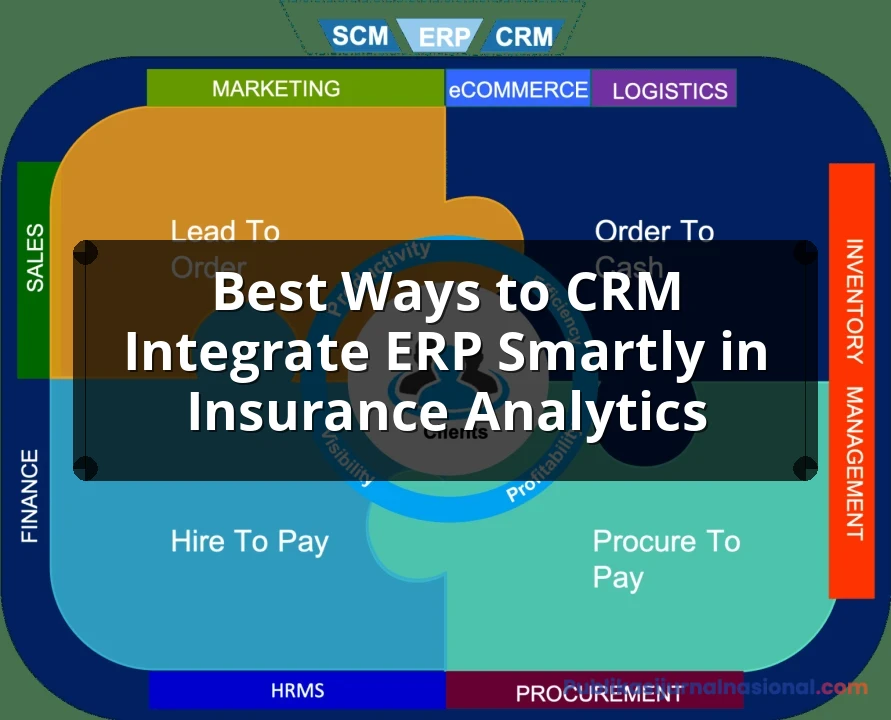
This article will delve into the best ways to integrate CRM and ERP systems smartly in the context of insurance analytics. We’ll explore the benefits of integration, the key features to consider, and the detailed steps involved in creating a seamless and effective integrated solution. By understanding the potential of this integration, insurance companies can unlock a new level of analytical capabilities, driving growth, efficiency, and customer satisfaction.
Understanding the Synergies: CRM, ERP, and Insurance Analytics
The integration of CRM and ERP systems provides a 360-degree view of the insurance business, combining customer-centric data with operational data. This synergy fuels advanced analytics, enabling insurers to make informed decisions across various functions.
The Power of Unified Data
Separately, CRM and ERP systems offer valuable insights. CRM provides data on customer demographics, policy preferences, interaction history, and claim details. ERP provides data on financial performance, resource allocation, and operational efficiency. When integrated, these data sources become a unified powerhouse, providing a comprehensive view of the customer and the business.
Enhanced Analytics Capabilities
With integrated data, insurance companies can leverage advanced analytics techniques to gain deeper insights. This includes:
- Predictive Modeling: Forecasting future claims, identifying high-risk customers, and predicting policy renewals.
- Customer Segmentation: Grouping customers based on shared characteristics to tailor marketing campaigns and improve customer service.
- Risk Assessment: Evaluating risk factors more accurately by combining customer data with operational data.
- Operational Efficiency Analysis: Identifying bottlenecks in processes and optimizing resource allocation.
Key Features to Look for in a CRM–ERP Integration for Insurance
Not all CRM–ERP integrations are created equal. To maximize the benefits of integration for insurance analytics, it’s crucial to look for specific features that cater to the unique needs of the industry.
Real-Time Data Synchronization
Real-time data synchronization is essential for ensuring that both CRM and ERP systems have access to the most up-to-date information. This eliminates data silos and ensures consistency across the organization. Changes made in one system are immediately reflected in the other, providing a single source of truth.
Customizable Data Mapping
Insurance companies often have unique data structures and fields in their CRM and ERP systems. A flexible integration solution should allow for customizable data mapping, enabling businesses to define how data is transferred and transformed between the two systems. This ensures that all relevant information is captured and accurately represented.
Automated Workflow Integration
Automating workflows between CRM and ERP systems can significantly improve efficiency and reduce manual errors. For example, when a new policy is created in the CRM system, the integration can automatically create a corresponding record in the ERP system for billing and accounting purposes. Similarly, when a claim is filed, the integration can trigger a series of automated tasks in both systems, such as updating customer records and initiating the claims processing workflow.
Role-Based Access Control
Security is paramount in the insurance industry. The integration should incorporate role-based access control, ensuring that users only have access to the data and functionalities relevant to their roles. This protects sensitive customer information and ensures compliance with data privacy regulations.
Reporting and Analytics Dashboards
The integration should provide comprehensive reporting and analytics dashboards that visualize key performance indicators (KPIs) and trends. These dashboards should be customizable to meet the specific needs of different users and departments, providing actionable insights for decision-making.
Steps to a Successful CRM–ERP Integration in Insurance Analytics
Integrating CRM and ERP systems is a complex project that requires careful planning and execution. Here’s a step-by-step guide to ensure a successful integration.
1. Define Clear Objectives and Scope
Before embarking on the integration, it’s crucial to define clear objectives and scope. What specific business problems are you trying to solve? What data do you need to integrate? Which processes do you want to automate? Having a clear understanding of your goals will guide the entire integration process.
2. Assess Your Existing Systems
Evaluate your existing CRM and ERP systems to understand their capabilities and limitations. Identify any gaps that need to be addressed before the integration. This assessment will help you determine the best integration approach and the resources required.
3. Choose the Right Integration Approach
There are several approaches to integrating CRM and ERP systems, including:
- Direct Integration: Connecting the two systems directly using APIs or custom code.
- Middleware Integration: Using a middleware platform to facilitate data exchange between the two systems.
- Cloud-Based Integration: Leveraging cloud-based integration platforms to connect cloud-based CRM and ERP systems.
The best approach depends on your specific needs and the capabilities of your existing systems.
4. Develop a Data Mapping Strategy
Create a detailed data mapping strategy that defines how data will be transferred and transformed between the CRM and ERP systems. Identify the corresponding fields in each system and define the rules for data conversion and validation. This strategy is crucial for ensuring data accuracy and consistency.
5. Implement the Integration
Implement the integration according to your chosen approach and data mapping strategy. This may involve writing custom code, configuring middleware platforms, or leveraging cloud-based integration tools. Ensure that the integration is thoroughly tested to identify and resolve any issues.
6. Test and Validate the Integration
Thoroughly test the integration to ensure that data is flowing correctly between the CRM and ERP systems. Validate the data to ensure accuracy and consistency. Involve users from different departments in the testing process to ensure that the integration meets their needs.
7. Train Users and Provide Support
Provide comprehensive training to users on how to use the integrated system. Create documentation and provide ongoing support to address any questions or issues that may arise. User adoption is critical for the success of the integration.
8. Monitor and Optimize the Integration
Continuously monitor the integration to ensure that it is performing as expected. Track key performance indicators (KPIs) to measure the impact of the integration on your business. Optimize the integration as needed to improve performance and address any emerging issues.
Benefits of Smart CRM–ERP Integration in Insurance Analytics
The benefits of a well-executed CRM–ERP integration in insurance analytics are numerous and far-reaching.
Improved Customer Experience
By having a complete view of the customer, insurance companies can provide more personalized and responsive service. This leads to improved customer satisfaction and loyalty.
Enhanced Risk Management
Integrating customer data with operational data allows for more accurate risk assessment and underwriting. This reduces the risk of fraudulent claims and improves profitability.
Increased Operational Efficiency
Automating workflows and eliminating data silos streamlines processes and reduces manual errors. This leads to increased operational efficiency and lower costs.
Better Decision-Making
With access to comprehensive and accurate data, insurance companies can make more informed decisions across all aspects of the business, from marketing and sales to underwriting and claims processing.
Increased Revenue and Profitability
By improving customer experience, enhancing risk management, and increasing operational efficiency, a smart CRM–ERP integration can ultimately lead to increased revenue and profitability.
Common Challenges and How to Overcome Them
While the benefits of CRM–ERP integration are significant, it’s important to be aware of the potential challenges and how to overcome them.
Data Quality Issues
Inconsistent or inaccurate data can derail the integration process and lead to inaccurate analytics. To address this, invest in data cleansing and standardization efforts before the integration. Implement data validation rules to ensure data accuracy going forward.
Integration Complexity
Integrating complex CRM and ERP systems can be challenging, especially if they are based on different technologies or have different data structures. To mitigate this, choose an integration approach that is appropriate for your specific systems and data. Consider using a middleware platform to simplify the integration process.
Lack of User Adoption
If users are not properly trained or are resistant to change, they may not fully utilize the integrated system. This can limit the benefits of the integration. To ensure user adoption, provide comprehensive training, involve users in the integration process, and communicate the benefits of the integration clearly.
Cost Overruns
Integration projects can be expensive, and costs can easily escalate if the project is not properly managed. To avoid cost overruns, define a clear scope, develop a detailed budget, and track progress closely. Consider using a phased approach to implement the integration in stages.
Conclusion: The Future of Insurance Analytics Lies in Smart Integration
In conclusion, the smart integration of CRM and ERP systems is a game-changer for insurance analytics. By combining customer-centric data with operational data, insurers can unlock a wealth of insights that drive growth, efficiency, and customer satisfaction. While the integration process can be complex, the benefits are well worth the effort. By following the steps outlined in this article and addressing the common challenges, insurance companies can successfully integrate their CRM and ERP systems and unlock the full potential of insurance analytics.
As the insurance industry continues to evolve, data-driven decision-making will become even more critical. Insurers that embrace CRM–ERP integration and leverage advanced analytics will be well-positioned to thrive in the future.
The journey towards a truly integrated and data-driven insurance organization requires commitment, planning, and the right technology. By embracing these principles, insurance companies can unlock a new era of innovation and success.
Frequently Asked Questions (FAQ) about Best Ways to CRM Integrate ERP Smartly in Insurance Analytics
Why integrate CRM and ERP for insurance analytics?
Integrating CRM and ERP provides a 360-degree customer view, improving risk assessment and personalized service. This unified data enhances fraud detection and enables more accurate predictive modeling for insurance analytics.
How to choose the right integration approach?
Consider pre-built connectors, custom APIs, or an integration platform as a service (iPaaS). Choose based on your technical expertise, budget, and the complexity of your CRM and ERP systems for effective insurance analytics.
What data security measures are crucial?
Implement robust encryption, access controls, and regular security audits to protect sensitive customer data during CRM and ERP integration. Compliance with regulations like GDPR and CCPA is essential for maintaining data privacy in insurance analytics.