In the dynamic world of insurance, staying competitive requires more than just offering attractive policies. It demands streamlined operations, efficient customer relationship management, and a holistic view of your business. This is where the strategic integration and customization of Customer Relationship Management (CRM) systems within Enterprise Resource Planning (ERP) systems become crucial. For insurance enterprises, this integration isn’t just a technological upgrade; it’s a pathway to enhanced customer experience, improved operational efficiency, and ultimately, increased profitability.
The insurance industry faces unique challenges, from managing complex policy data and claims processing to ensuring compliance with stringent regulations. Off-the-shelf ERP systems often lack the specific functionalities needed to address these challenges effectively. That’s why customizing your ERP system with a robust CRM module tailored to the insurance sector is essential. This customization allows you to bridge the gap between back-office operations and front-line customer interactions, creating a seamless flow of information and enabling data-driven decision-making.
This comprehensive guide delves into the intricacies of CRM customization for ERP systems in the insurance industry. We’ll explore the key features to consider, the benefits of integration, and the steps involved in implementing a successful CRM-integrated ERP solution. Whether you’re a seasoned IT professional or a business leader looking to optimize your insurance operations, this article will provide you with the knowledge and insights you need to navigate the complexities of ERP and CRM customization and unlock the full potential of your enterprise.
Understanding the Synergies: CRM and ERP for Insurance
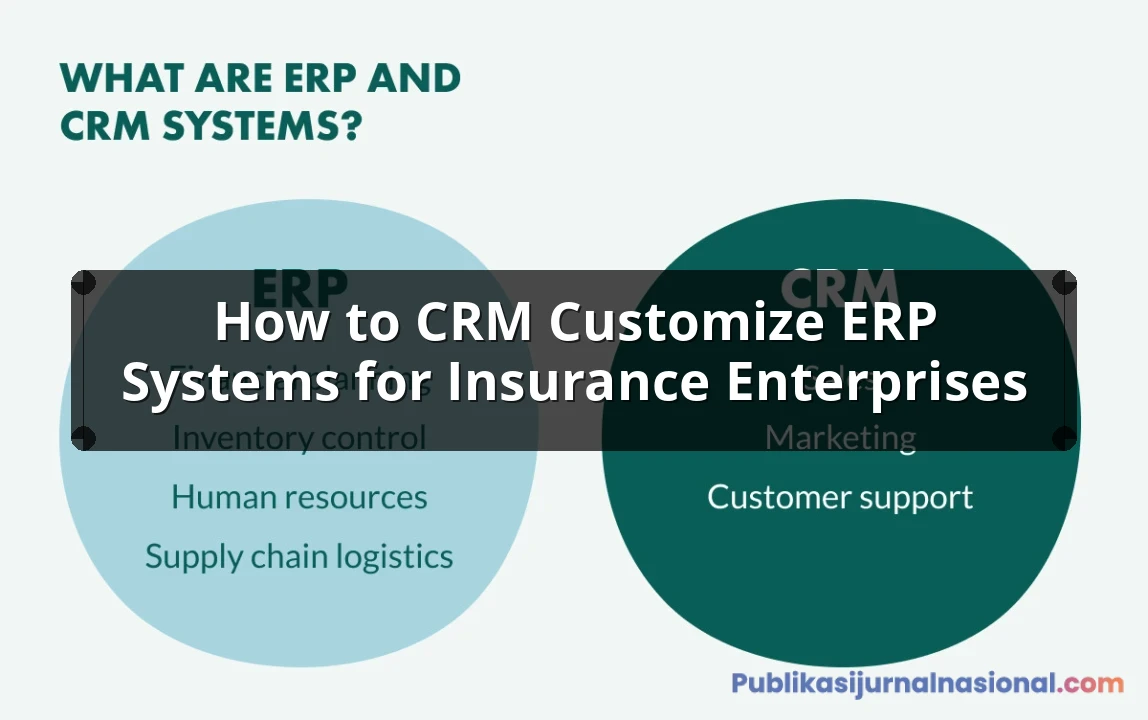
Before diving into customization, it’s crucial to understand how CRM and ERP systems work together to benefit insurance enterprises. ERP systems primarily focus on managing internal business processes, such as finance, accounting, human resources, and supply chain management. CRM systems, on the other hand, are designed to manage customer interactions and relationships, including sales, marketing, and customer service. When integrated, these systems create a unified platform that provides a 360-degree view of your business.
Key Benefits of CRM–ERP Integration in Insurance
The integration of CRM and ERP systems offers a multitude of benefits for insurance companies:
- Improved Customer Experience: Access to comprehensive customer data allows agents and customer service representatives to provide personalized and efficient service.
- Enhanced Sales and Marketing Effectiveness: Targeted marketing campaigns and proactive sales efforts based on customer data lead to increased lead generation and conversion rates.
- Streamlined Claims Processing: Integration allows for seamless data flow between CRM and ERP, accelerating claims processing and reducing errors.
- Optimized Policy Management: Centralized policy information and automated workflows improve policy administration and reduce manual effort.
- Better Data-Driven Decision-Making: A unified view of customer and operational data enables informed decision-making across all departments.
- Increased Operational Efficiency: Automation of tasks and streamlined processes reduce administrative overhead and improve overall efficiency.
- Improved Compliance: Centralized data management and audit trails help ensure compliance with industry regulations.
Essential CRM Features for Insurance ERP Customization
Customizing your CRM within your ERP system requires careful consideration of the specific needs of your insurance business. Here are some essential CRM features to prioritize:
Lead Management
Effective lead management is crucial for acquiring new customers. The CRM should allow you to capture leads from various sources, such as online forms, marketing campaigns, and agent referrals. It should also provide tools for lead qualification, nurturing, and distribution to the appropriate agents.
Contact and Account Management
A robust contact and account management system is essential for maintaining accurate customer information. The CRM should allow you to store detailed customer profiles, including contact information, policy details, claims history, and communication logs. It should also provide tools for segmenting customers based on demographics, policy types, and other criteria.
Policy Management
This feature allows agents to easily access and manage policy information, including coverage details, premiums, payment schedules, and renewal dates. Integrated policy management streamlines policy administration and reduces errors.
Claims Management
A well-integrated claims management module is critical for efficient claims processing. The CRM should allow customers to submit claims online or through mobile devices. It should also provide tools for claims tracking, documentation management, and communication with adjusters and claimants.
Quote Management
This feature enables agents to quickly generate accurate quotes based on customer information and policy requirements. Quote management tools should integrate with rating engines and policy underwriting systems to ensure accurate pricing.
Marketing Automation
Marketing automation tools allow you to automate marketing tasks, such as email campaigns, social media posts, and lead nurturing. These tools help you reach potential customers with targeted messages and improve lead conversion rates.
Customer Service and Support
A comprehensive customer service and support module is essential for providing excellent customer service. The CRM should provide tools for managing customer inquiries, resolving complaints, and tracking customer satisfaction. It should also integrate with communication channels, such as phone, email, and chat.
Reporting and Analytics
Robust reporting and analytics capabilities are crucial for monitoring performance and identifying areas for improvement. The CRM should provide pre-built reports and dashboards that track key metrics, such as sales performance, customer satisfaction, and claims processing times. It should also allow you to create custom reports to meet your specific needs.
Customization Strategies for Insurance-Specific Requirements
While many CRM systems offer standard features, insurance companies often require customization to address their unique needs. Here are some common customization strategies:
Integration with Rating Engines
Integrating your CRM with rating engines allows agents to quickly generate accurate quotes based on real-time pricing data. This integration eliminates manual data entry and reduces the risk of errors.
Integration with Policy Underwriting Systems
Integration with policy underwriting systems streamlines the underwriting process and reduces the time it takes to issue policies. This integration allows underwriters to access customer data directly from the CRM and make informed decisions.
Custom Workflows for Claims Processing
Customizing workflows for claims processing can significantly improve efficiency and reduce errors. Workflows can be designed to automate tasks, such as claim assignment, documentation review, and payment processing.
Compliance Management Features
Insurance companies must comply with a variety of regulations. Customizing your CRM with compliance management features helps ensure that you meet these requirements. These features can include audit trails, data encryption, and access controls.
Mobile Accessibility
In today’s mobile-first world, it’s essential to provide agents and customers with mobile access to the CRM. Mobile accessibility allows agents to access customer data and perform tasks from anywhere, while customers can submit claims, track policy information, and communicate with agents through their mobile devices.
Implementation Steps for CRM Customization in ERP Systems
Implementing a CRM-integrated ERP solution requires careful planning and execution. Here are some key steps to follow:
- Define Your Requirements: Clearly define your business requirements and identify the specific CRM features you need.
- Choose the Right ERP and CRM Systems: Select ERP and CRM systems that are compatible and offer the necessary customization options. Consider cloud-based solutions for scalability and flexibility.
- Plan the Integration: Develop a detailed integration plan that outlines the data flow between the ERP and CRM systems.
- Customize the CRM: Customize the CRM to meet your specific needs, including integrating with rating engines, policy underwriting systems, and other relevant applications.
- Test Thoroughly: Conduct thorough testing to ensure that the integrated system functions correctly and meets your requirements.
- Train Your Users: Provide comprehensive training to your users to ensure that they can effectively use the new system.
- Go Live and Monitor: Go live with the new system and monitor its performance closely. Make adjustments as needed to optimize performance.
Choosing the Right Technology Partner
Selecting the right technology partner is crucial for a successful CRM–ERP implementation. Look for a partner with:
- Experience in the insurance industry.
- Expertise in ERP and CRM systems.
- A proven track record of successful implementations.
- A commitment to providing ongoing support.
Common Challenges and How to Overcome Them
Implementing a CRM-integrated ERP solution can be challenging. Here are some common challenges and how to overcome them:
Data Migration
Migrating data from legacy systems to the new system can be complex and time-consuming. To overcome this challenge, plan the data migration carefully and use data migration tools to automate the process.
User Adoption
Getting users to adopt the new system can be difficult. To overcome this challenge, provide comprehensive training and involve users in the implementation process.
Integration Issues
Integrating ERP and CRM systems can be complex. To overcome this challenge, choose compatible systems and work with an experienced technology partner.
The Future of CRM and ERP in Insurance
The future of CRM and ERP in insurance is likely to be driven by advancements in artificial intelligence (AI) and machine learning (ML). AI-powered CRM systems can automate tasks, such as lead scoring, customer segmentation, and claims processing. ML algorithms can analyze data to identify patterns and predict customer behavior, enabling insurance companies to provide personalized services and improve risk management. Cloud-based solutions will also become increasingly popular, offering scalability, flexibility, and cost savings.
Conclusion
Customizing your ERP system with a robust CRM module is essential for insurance enterprises looking to improve customer experience, enhance operational efficiency, and drive growth. By carefully considering your specific needs, choosing the right technology partner, and implementing a well-planned integration strategy, you can unlock the full potential of your business and stay ahead of the competition. The integration of CRM and ERP is not just a technological upgrade; it’s a strategic investment in the future of your insurance enterprise.
Frequently Asked Questions (FAQ) about How to CRM Customize ERP Systems for Insurance Enterprises
Why customize ERP for insurance CRM?
Customization integrates CRM and ERP, streamlining insurance processes. This improves data accuracy, reduces manual entry, and enhances customer service by providing a unified view of client information.
What CRM customizations are common for insurance?
Common customizations include policy management, claims tracking, and automated quote generation. Integrating these features within the CRM enhances efficiency and provides a personalized customer experience within the ERP.
How to ensure successful CRM/ERP integration?
Start with a clear strategy, involving key stakeholders from both CRM and ERP teams. Thorough testing and training are essential to ensure a smooth transition and user adoption of the integrated system.